| What is involved |
Subdivide
Key Considerations
| Developing |
Can I Subdivide My Property?
It depends on:
Your zoning
Minimum lot size requirements
Minimum frontage rules
Overlays (flood, character, environmental, bushfire)
Access and driveway width
Easements and site constraints
There is no universal block size that guarantees subdivision approval.
You must assess your property against the planning scheme in your area.
What Is the Minimum Land Size to Subdivide?
Minimum lot size varies by zoning.
In many Low Density Residential areas:
Standard lots often require 400m²–600m² per lot
Minimum frontage is commonly 10m–12.5m, depending on zone
Battle-axe (rear) lots have stricter access width requirements
In Medium Density zones, smaller lots may be permitted — but conditions apply.
Important:
Total block size alone does not determine eligibility. A 900m² block may still be unsuitable if:
Frontage is too narrow
There are flood overlays
Significant slope limits buildable area
Easements restrict development
How Do I Check My Zoning?
To determine subdivision potential:
Check your property zoning via the Planning Scheme online mapping system.
Review minimum lot size and frontage requirements.
Identify any overlays (flood, environmental significance, bushfire hazard, character).
Confirm driveway access width and servicing feasibility.
Because zoning rules change by precinct, a professional town planner review is strongly recommended before making assumptions.
What Does It Cost to Subdivide?
Subdivision costs vary depending on complexity, but typical expenses may include:
Planning & Professional Fees
Town planner: $3,000–$10,000+
Surveyor: $4,000–$12,000+
Engineering plans: $5,000–$15,000+
Council & Infrastructure Charges
Application fees
Infrastructure charges (can exceed $20,000–$30,000 per additional lot depending on classification)
Civil Works
Driveways and access
Stormwater upgrades
Sewer and water connections
Electrical and NBN upgrades
Civil works can range from $30,000 to $100,000+, depending on scope.
Total Indicative Range
A straightforward two-lot subdivision may cost anywhere from:
$60,000 to $150,000+
Complex sites can exceed this significantly.
Every site is different.
How Long Does Subdivision Take?
Timeframes depend on complexity but typically include:
Planning and application: 3–6 months
Council assessment: 3–6 months
Civil works and servicing: 2–4 months
Plan sealing and titles: 1–3 months
Total timeframe: often 6–12+ months from feasibility to new titles.
Delays can occur if:
Information requests are issued
Infrastructure upgrades are required
Overlay constraints complicate approval
What Factors Can Prevent Subdivision?
Common constraints include:
Flood overlay restrictions
Environmental protection zones
Character housing protections
Insufficient frontage
Steep slope
Sewer location conflicts
Easement limitations
Even large blocks can fail feasibility if constraints are significant.
Is Subdividing Profitable?
Profitability depends on:
Purchase price (or current land value)
Subdivision costs
End sale value of new lots or dwellings
Holding costs
Market timing
Subdivision can create value by:
Unlocking underutilised land
Increasing total resale value
Creating additional rental income streams
But margins must be carefully modelled before committing.
Should You Speak to a Planner or Builder First?
For most property owners:
Start with a town planner to confirm subdivision viability.
Engage a surveyor for concept layout.
Speak with a builder early to confirm build feasibility and cost per dwelling.
Run full feasibility numbers including contingencies.
Skipping feasibility is where people lose money.
Bottom Line
Subdividing is often possible but it is highly site-specific.
There is no “magic block size” that guarantees approval.
Before proceeding, confirm:
Zoning
Minimum lot size
Frontage requirements
Overlays
Servicing constraints
Full cost feasibility
Subdivision can unlock significant value – but only when planning rules, costs and end values align.

+ Capitalising
I’ve subdivided my land – now what do I do?
Selling the Vacant Land is the most direct way. After obtaining separate titles for the new blocks, the vacant land can be sold on the open market. The profit from this sale (after deducting a portion of the original cost and subdivision expenses) is the realised capital.
But there other ways you can potentially generate more wealth from this same land…
- Building and Selling a New Dwelling: A homeowner can use the new block to build a second house (a dual occupancy) and then sell the new house and land package. This often yields a higher return than selling a vacant lot, but involves more a bit more work (don’t worry, we can take care of that).
- Building and Renting the New Dwelling: Instead of selling, the new property can be rented out, generating a new, passive income stream and growing the overall asset base and equity.
Dollars
+ Sense
What Are the Tax Implications of Subdividing Property?
If you subdivide and sell part of your land, tax will almost always apply.
The treatment depends on your intent and circumstances.
Is Subdivided Land Subject to Capital Gains Tax (CGT)?
In most cases, yes.
When you sell a newly created lot, any profit is generally subject to Capital Gains Tax (CGT).
Key points:
The main residence exemption usually only applies to the lot containing the original home.
The exemption typically applies only if the home and that lot are sold together.
Vacant subdivided lots are usually fully taxable.
What Is Cost Base Apportionment?
When you subdivide, the original purchase cost of the entire property must be apportioned across the new lots.
This includes:
Purchase price
Stamp duty
Legal fees
Acquisition costs
The cost base must be reasonably divided between the lots to calculate the capital gain accurately.
Incorrect apportionment can significantly affect your tax outcome.
Could Subdivision Be Treated as Business Income Instead of CGT?
Yes – and this is critical.
If your subdivision activity is considered a profit-making venture or business operation, the proceeds may be treated as:
Ordinary income (not capital gain)
Potentially subject to GST
This often depends on:
Your intent at purchase
Scale of activity
Repetition of projects
Level of development work undertaken
Because this area is complex, professional tax advice is essential before selling subdivided land.
What Planning Rules Affect Subdivision?
Local council planning schemes determine:
Whether subdivision is permitted
Minimum lot sizes
Frontage requirements
Infrastructure contributions
Servicing requirements
On the Gold Coast, these rules are governed by the City of Gold Coast planning scheme.
Approval feasibility should always be confirmed before proceeding.
What Happens After Subdivision Approval?
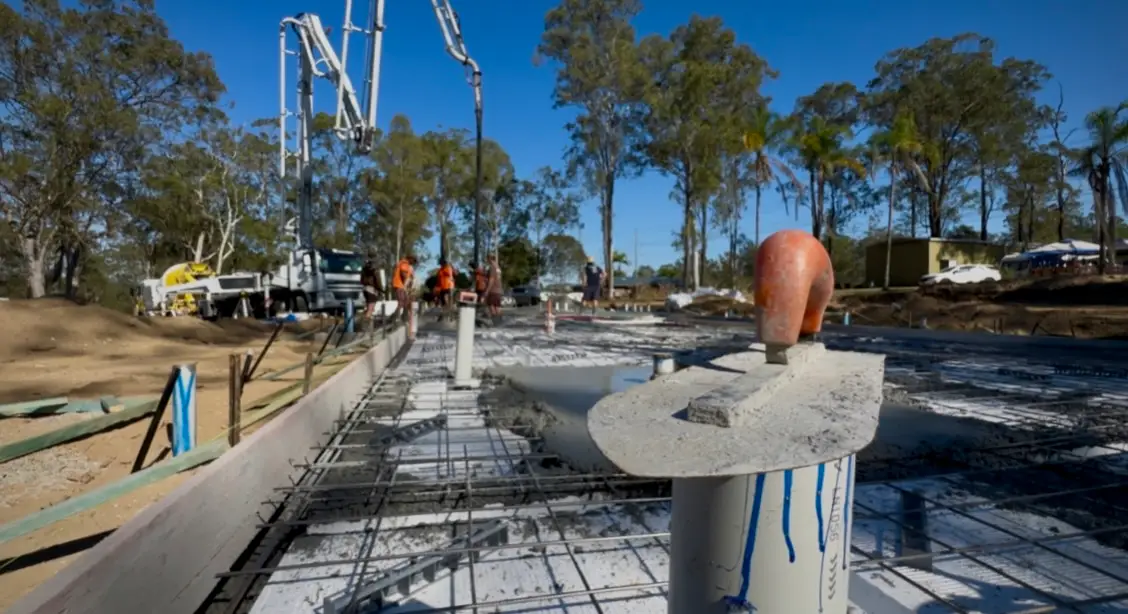
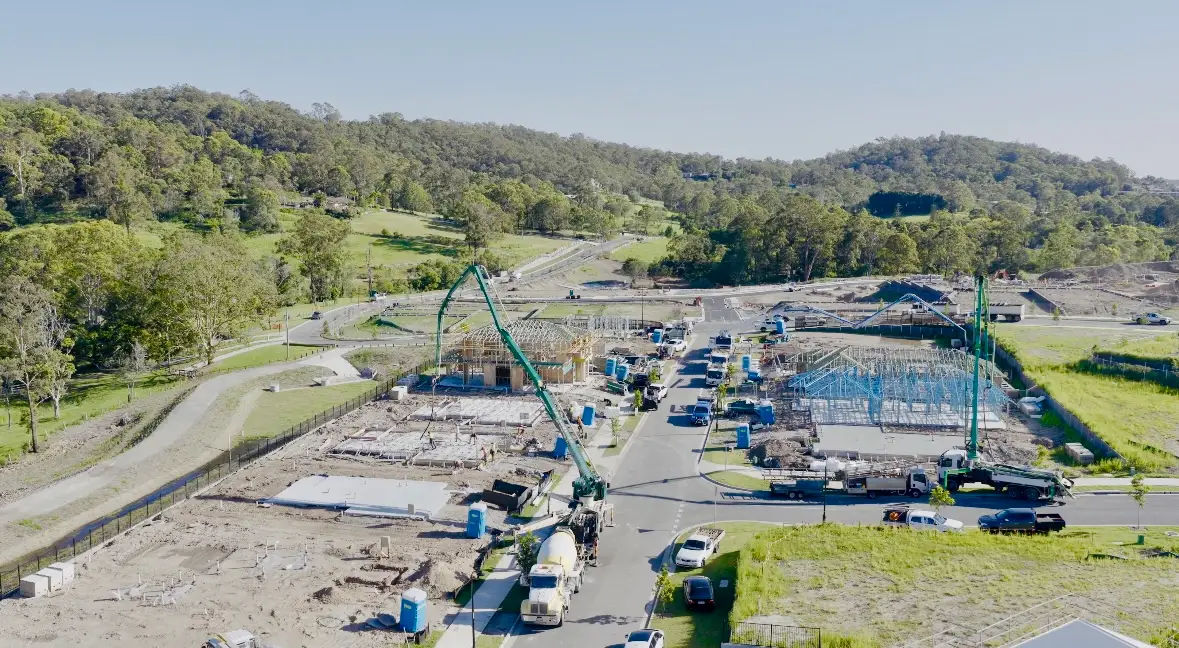
Once planning, feasibility, and tax considerations are understood, the next major stage is construction.
And this is where many first-time subdividers underestimate risk.
What Are the Biggest Risks When Building After Subdivision?
Common unknowns include:
Selecting the right floorplan for resale or rental demand
Choosing cost-effective materials
Managing variations
Controlling build timelines
Maintaining budget certainty
In tight-margin development projects, construction overruns can erase profit quickly.
How Can Developers Reduce Build Risk?
Developers and owner-subdividers looking to build investment homes should prioritise:
Proven, repeatable floorplans
Standardised build specifications
Transparent fixed-price contracts
Strong trade networks
On-time, on-budget delivery history
Building for investment is different from building a custom home.
It requires:
Yield-focused design
Efficient layouts
Market-tested inclusions
Cost discipline
Bottom Line
Subdividing property involves:
Capital Gains Tax considerations
Possible GST exposure
Cost base apportionment
Council planning approval
Infrastructure contributions
Construction risk
Tax and planning advice should be obtained early.
Once feasibility is confirmed, partnering with a builder experienced in delivering investment-grade homes at scale can significantly reduce risk and improve outcome certainty.
Subdivision can create value – but only when tax, compliance and construction are aligned from day one.
+ What
FRD Deliver
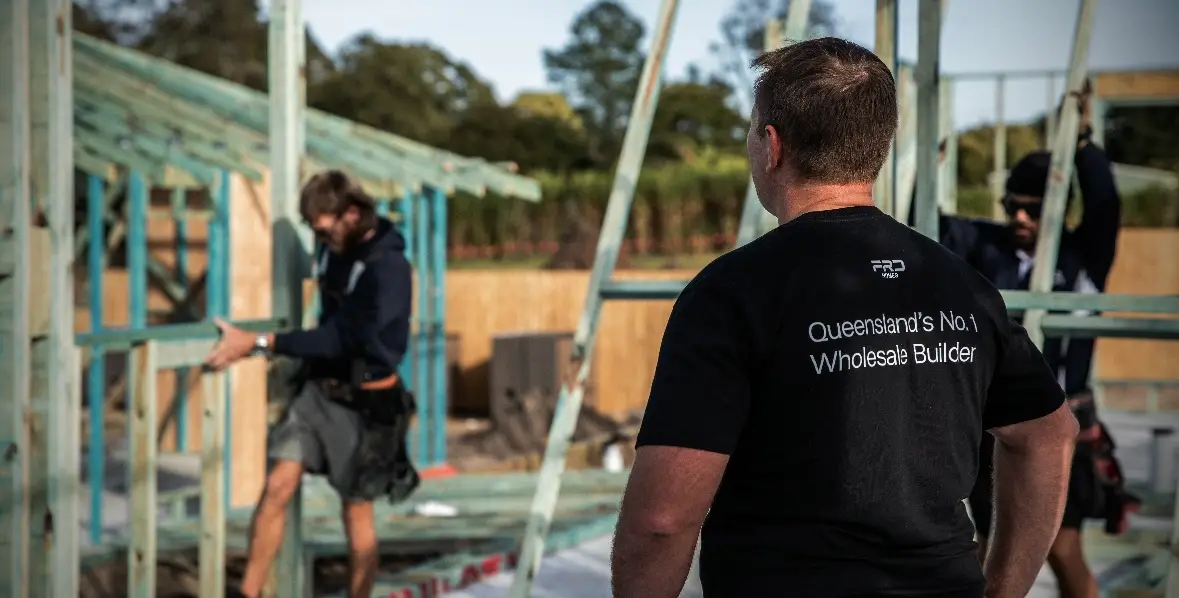
We are Queensland’s No.1 Wholesale Builder.
At FRD, we are wholesale builders. We can not only build an investment property for you, we can also take care of selling it too through our extensive referal partner network.
This approach can help you realise the full potential value of your land smoothly with minimal financial outlay.
Our focus is on building affordable homes designed specifically for the investment market. We know what sells and we have a pipeline in place that is crying out for more of what we build.
Curious? Reach out today!