


| Insights |
Property
Investment
| Cotality |
Market {br] Sentiment
Good Buys
2025
What are the Australian property market trends to watch in 2026?
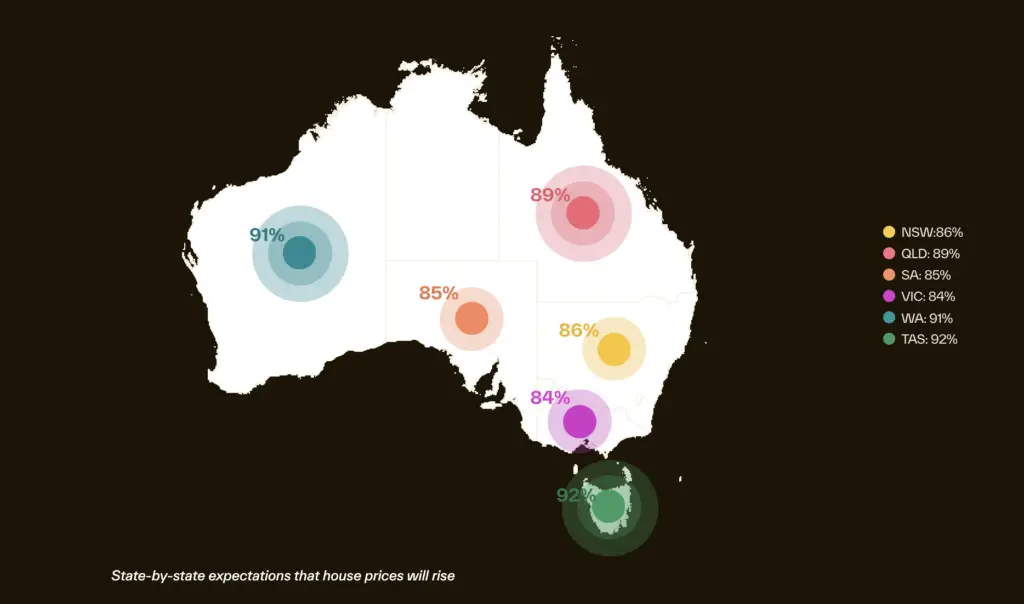
National confidence in Australia’s housing market remains strong entering 2026 – but performance expectations are increasingly split by state.
According to new research from Cotality in its Decoding 2026 report:
87% of property and finance professionals expect dwelling values to rise over the next 12 months
Only 3.5% expect prices to fall
This suggests continued national growth – though not evenly distributed.
What Does the Data Say About Property Price Growth in 2026?
The survey, based on responses from:
Real estate agents
Finance professionals
Property sector advisers
…shows strong forward expectations for price appreciation in 2026.
However, the outlook is becoming more state-dependent due to:
Affordability constraints
Interest rate uncertainty
Diverging local economic conditions
In other words: national sentiment is positive, but local markets will likely perform differently.
Why Is Confidence Still High Despite Interest Rates?
Even with rate volatility and affordability pressure, several factors are supporting housing market performance:
Limited housing supply
Population growth
Strong employment conditions
Persistent demand for well-located properties
However, higher borrowing costs are expected to:
Slow the pace of growth
Reduce borrowing capacity
Increase buyer caution in higher-priced markets
This creates a two-speed market environment.
Are All Australian States Performing the Same?
No.
Market conditions are increasingly fragmented.
Key drivers of divergence include:
Entry price points
Wage growth by state
Migration patterns
Housing supply levels
Infrastructure investment
Affordable markets with population inflows tend to show stronger growth resilience, while premium markets are more sensitive to interest rate changes.
Is Australian Property Expected to Rise or Fall in 2026?
Based on current professional sentiment:
The majority expect prices to rise.
Very few expect broad price declines.
Growth may be moderate rather than aggressive.
Performance will vary significantly by region.
For investors, this reinforces a key principle:
National headlines matter less than local data.
What This Means for Property Investors
If you’re analysing how Australian property performs:
Expect continued growth nationally.
Focus on state and suburb-level fundamentals.
Stress-test deals against interest rate variability.
Watch affordability metrics closely.
Confidence remains strong – but selectivity is increasing.
The era of “everything goes up together” is fading. The era of strategic asset selection is here.
+ the
up + up
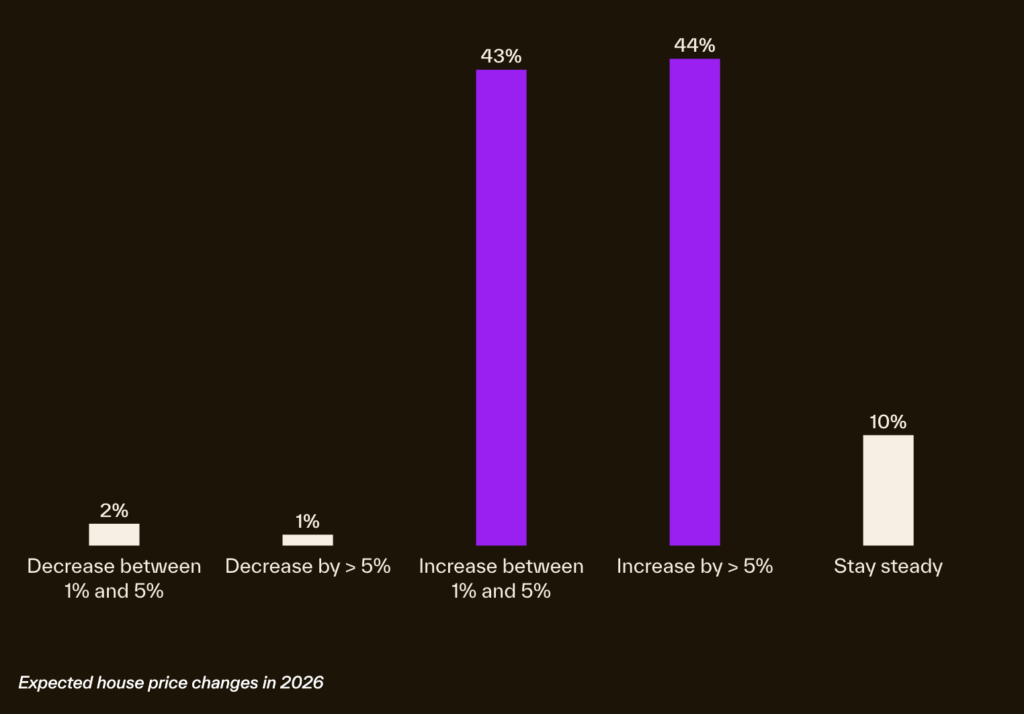
Almost half expect growth above 5%, highlighting the continued market optimism after widespread price gains through 2025.
Cotality’s December Home Value Index showed housing values rose across every capital city and regional market last year, with national dwelling values increasing 8.6% and adding around $71,400 to the median home value.
+ Insights
What is going on in Australian and New Zealand property in 2026?
Housing markets across Australia and New Zealand are experiencing uneven growth in 2026, with performance increasingly shaped by:
Affordability pressures
Interest rate movements
Credit policy changes
State-by-state economic differences
According to the Decoding 2026 report by Cotality, property market conditions are no longer moving uniformly across regions.
For new investors, this means strategy matters more than ever.
Where Does This Property Data Come From?
The insights are based on feedback from more than 1,100 property professionals across Australia and New Zealand, including experts in:
Residential real estate
Commercial real estate
Banking and lending
Mortgage broking
Property valuation
Development
Government
This provides a frontline perspective from professionals actively working in the market – not just theoretical analysis.
Is Market Confidence Positive in 2026?
Yes – but it’s nuanced.
The findings show:
Overall market confidence remains broadly positive.
Growth expectations differ significantly by state.
Performance varies by price point.
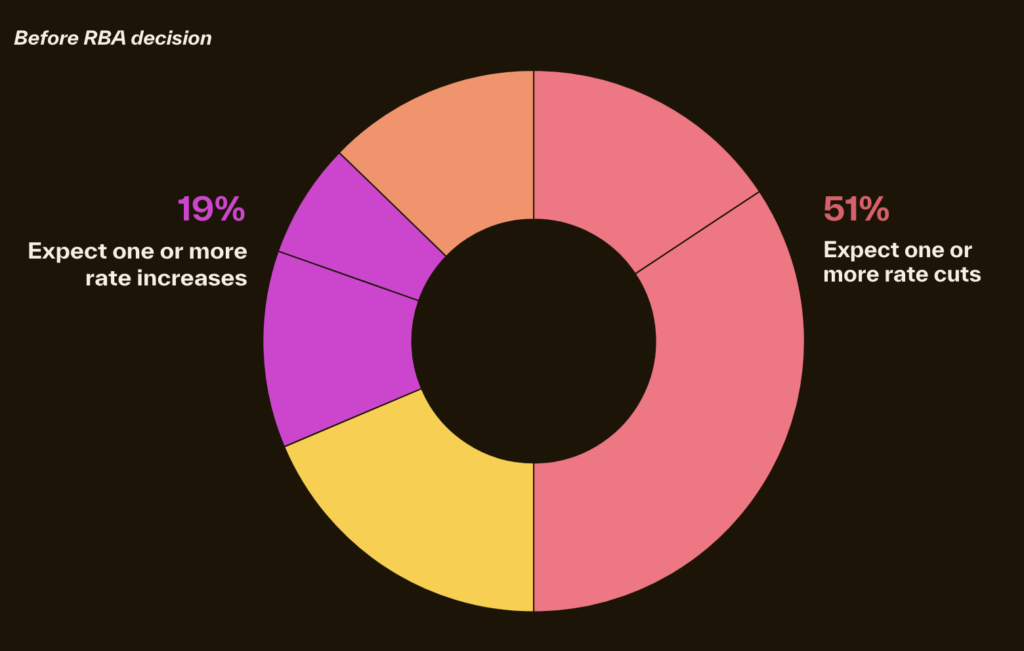
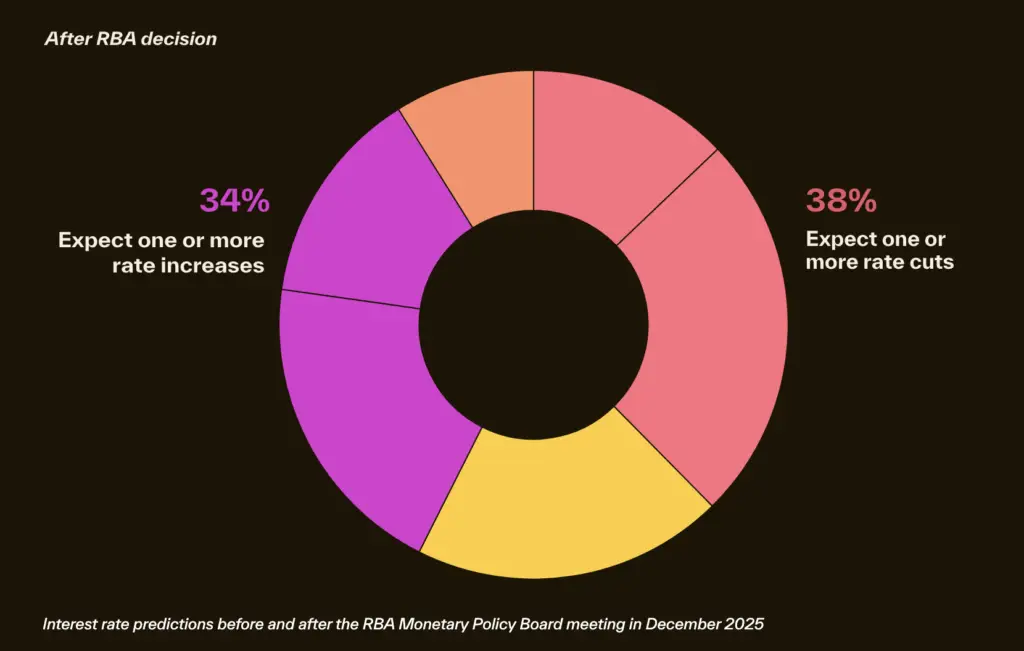
Markets react more sharply to interest rate and policy decisions.
For beginners, the key takeaway is this:
National headlines don’t tell the full story.
Property is becoming more localised and more sensitive to financial conditions.
Why Is Growth Uneven Across States?
Several factors are driving differences between states and cities:
Entry-level affordability
Wage growth
Migration trends
Supply levels
Exposure to credit tightening
Government housing policy
Markets with stronger affordability and population growth tend to show greater resilience. Higher-priced markets are more sensitive to rate hikes and lending restrictions.
What Should New Property Investors Learn From This?
If you’re new to property investing in 2026, here’s what this environment means:
Don’t rely on national averages alone.
Analyse state and suburb-level data.
Pay attention to interest rate policy.
Consider borrowing capacity changes.
Understand how credit conditions affect demand.
The days of “buy anywhere and win” are over.
Now it’s about:
Risk management
Smart location selection
Understanding lending conditions
Watching policy signals
How Is the Property Industry Adapting?
The report also highlights how real estate agencies are changing their digital strategies, including:
Greater focus on digital independence
Increased use of first-party data
Stronger analytics capabilities
For investors, this signals a more data-driven and competitive market environment.
Bottom Line for Beginner Property Investors
The 2026 property market across Australia and New Zealand is:
Growing – but unevenly
Confident – but cautious
Sensitive to rates and policy
Increasingly state and suburb specific
If you’re starting out, the most important shift to understand is this:
Success in property investing now depends less on market momentum – and more on informed decision-making.
It’s no longer about riding the wave. It’s about choosing the right beach.
+ The Great Divide
How to Stay Ahead of the Property Investment Curve in 2026
In 2026, staying ahead in property investing isn’t just about buying the right suburb.
It’s about understanding how digital platforms, data ownership, and buyer behaviour are reshaping the market.
Insights from the Decoding 2026 survey by Cotality show that the property industry is undergoing a major digital shift – and investors who understand it early gain an advantage.
How Is the Property Search Process Changing?
The way buyers discover properties is evolving rapidly.
Traditionally, buyers relied on:
Major property portals
Agent websites
Email alerts
Now, new discovery channels are emerging.
In late 2025, Google began testing property listings directly within search results in select markets, potentially allowing users to:
View listings directly in search
Submit inspection enquiries
Contact agents without leaving the platform
If this expands, it could significantly change how traffic flows to listings.
For investors, this means:
Visibility is shifting.
Competition dynamics may shift with it.
Why Does Digital Engagement Matter to Investors?
According to survey responses:
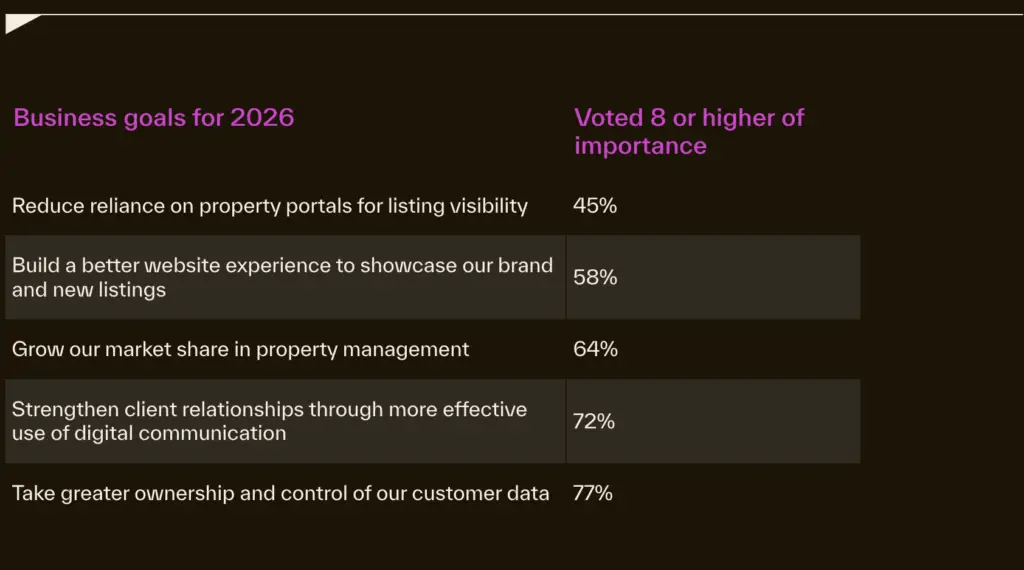
More than 75% of property professionals rate improved oversight of customer interactions as highly important.
77% say greater control of customer data is a top priority.
This tells us two things:
The industry recognises that relationships and data drive outcomes.
Execution is lagging behind intention.
For investors, that gap creates opportunity.
What Does “Data Ownership” Mean in Property?
Data ownership refers to:
Direct access to buyer and seller information
Control over enquiry data
Independent marketing databases
Reduced reliance on third-party platforms
When agencies rely heavily on third-party portals, they rent access to audiences.
When they build first-party databases, they own their audience.
That shift affects:
Off-market deal access
Early listing alerts
Negotiation leverage
Market intelligence
Smart investors pay attention to where the data lives.
How Can Investors Stay Ahead in 2026?
To stay ahead of the curve:
1. Build Direct Relationships
Don’t rely only on portals. Develop direct connections with:
Agents
Buyers’ advocates
Mortgage brokers
Early intelligence often travels privately before it hits public platforms.
2. Watch Platform Shifts
If large tech platforms expand property listing integrations, buyer traffic patterns may change quickly.
That can affect:
Listing exposure
Days on market
Competition intensity
3. Prioritise Data-Driven Decisions
Use:
Suburb-level performance data
Lending trends
Buyer demand signals
Auction clearance rates
Investing in 2026 rewards those who read signals early.
4. Understand Digital Influence on Demand
The easier it becomes to discover and enquire on a property, the faster demand can spike.
Digital friction is decreasing.
Speed of competition is increasing.
Why This Matters for Property Investment Returns
In a slower-growth, rate-sensitive environment:
Margins are tighter.
Timing matters more.
Access to information creates edge.
The investors who win in 2026 aren’t just buying property.
They’re understanding:
How buyers search
How agents manage data
Where demand originates
How digital platforms influence visibility
Bottom Line
Staying ahead of the property investment curve in 2026 means tracking more than prices.
It means watching:
Digital platform shifts
Data ownership trends
Buyer engagement patterns
Technology integration in real estate
The property market is no longer just physical.
It’s digital first – and the investors who adapt fastest position themselves ahead of the crowd.
+ The Bottom Line
2026 confidence in property is high… but uneven
Industry sentiment entering 2026 remains strongly positive, with very little downside risk priced into expectations.
Nationally, 87% of survey respondents expect dwelling values to rise over the year ahead, while only 3.5% anticipate prices will fall. Almost half, 44%, expect price growth of more than 5%.