| Australian Property |
Ownership
| Property Investment |
Buying In
+ property 2026
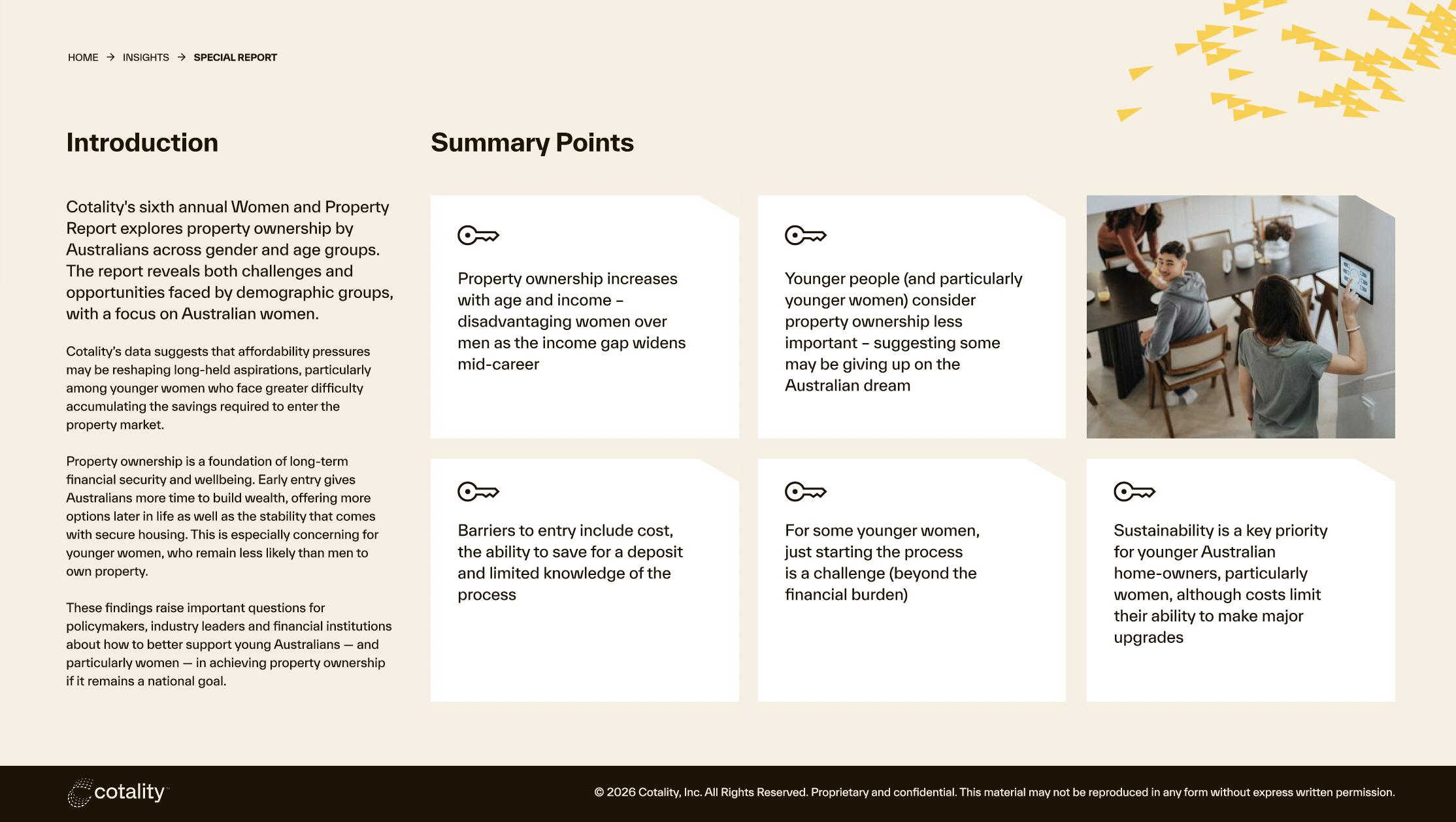
Cotality’s sixth annual Women and Property Report takes a clear look at who owns property in Australia – across gender and generations – and the picture isn’t evenly balanced.
The data highlights both progress and pressure points, particularly for Australian women.
Rising costs and higher entry barriers are reshaping long-held aspirations – especially for younger women, who are finding it harder to accumulate the savings needed to enter the market.
These findings raise serious questions for policymakers, industry leaders and financial institutions. Because when entry gets harder for one group, the long-term consequences don’t stay isolated.
+ Buy In
Employment patterns across generations also tell a clear story.
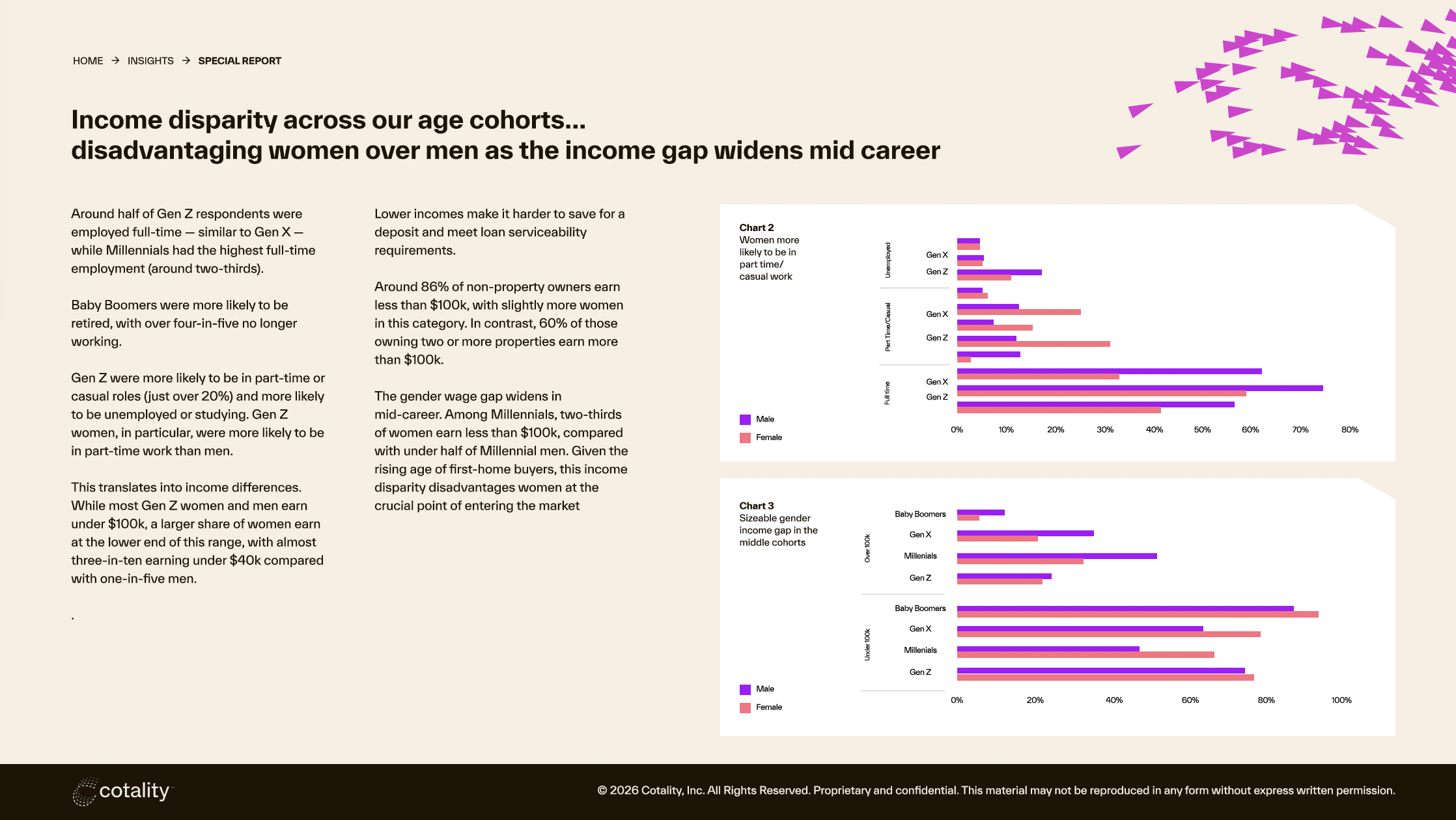
Around half of Gen Z respondents are working full-time – similar to Gen X – while Millennials lead the pack, with roughly two-thirds in full-time roles.
Baby Boomers, unsurprisingly, are largely out of the workforce, with more than four in five retired.
But the real shift is happening within Gen Z.
They are significantly more likely to be in part-time or casual work (just over 20%), and more likely to be unemployed or studying. Gen Z women in particular are more likely than their male counterparts to be working part-time.And that difference shows up in income.
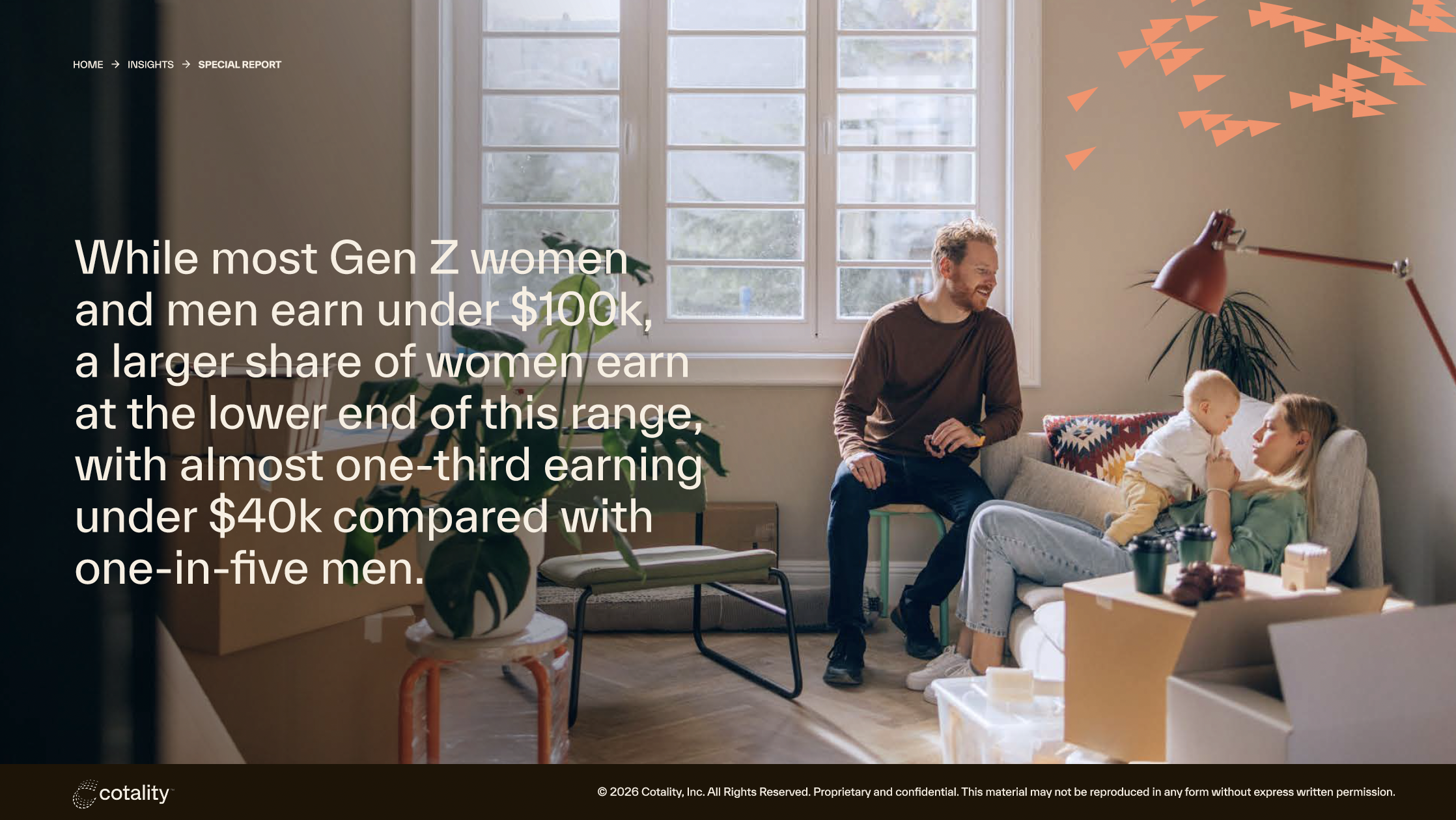
While most Gen Z men and women earn under $100,000, women are more concentrated at the lower end of the scale. Nearly three in ten Gen Z women earn under $40,000, compared to around one in five men.
The result? Early-career income gaps that can directly impact saving capacity, borrowing power and long-term financial momentum.
+ Property Ladder
Financial barriers aren’t the only thing holding women back from property ownership.
For many younger women, especially Gen Z, the challenge isn’t just money – it’s confidence and knowledge.
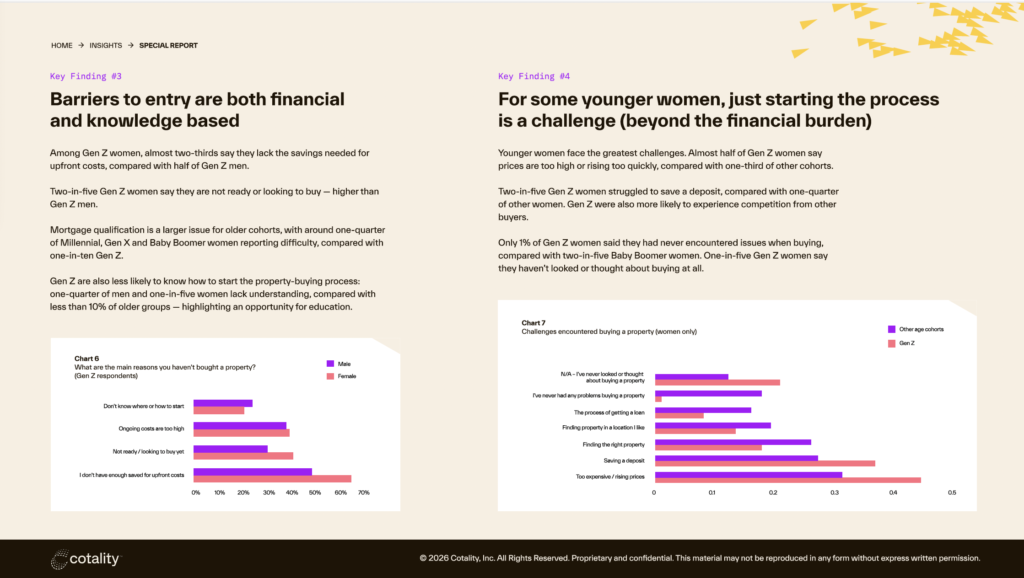
Among Gen Z women, almost two-thirds say they don’t have the savings needed for upfront costs like a deposit and transaction fees. That compares with around half of Gen Z men.
But it doesn’t stop there.
Two in five Gen Z women say they’re not ready or not even looking to buy – a higher proportion than Gen Z men.
And while upfront savings remain the biggest hurdle for both genders, ongoing costs like council rates, insurance and maintenance also weigh heavily in decision-making.
Then there’s the knowledge gap.
Gen Z are significantly less likely to know how to start the property-buying process. Around one-quarter of young men and one in five young women say they lack understanding of how it works – compared with fewer than one in ten in older generations.
For women who already own property, non-monetary challenges don’t disappear.
In the 2026 survey, 15% of female respondents said understanding the buying process was a challenge, compared with 12% of men.
Generational differences are clear here too. Among property owners, 15% of Gen Z and 20% of Millennials said navigating the buying process was difficult – compared with just 5% of Baby Boomers.
Mortgage qualification also becomes a bigger issue in older cohorts, with around one-quarter of Millennial, Gen X and Baby Boomer women reporting difficulty, compared with one in ten Gen Z.
The takeaway?
For women – particularly younger women — the barriers are layered. Yes, savings matter. But so does access to information.
Confidence in the process.
And feeling equipped to take the first step.
That gap highlights not just a funding issue – but a clear opportunity for education and support.