


| Land Development |
Building
Houses
| Building Better
Quality
Homes
The Problem
Australia’s housing crisis is no longer a short-term disruption. It is a structural imbalance between population growth and construction capacity. For developers and owner-subdividers, this imbalance presents opportunity – but only for those aligned with builders who can deliver at scale.
Is Australia Still Facing a Housing Crisis?
Yes.
Population growth continues to accelerate due to:
Overseas migration
Returning international students
Natural population growth
Smaller household sizes
At the same time, new housing supply has stalled.
Key constraints include:
Elevated construction costs
Builder insolvencies reducing industry capacity
Slow planning approval processes
Skilled labour shortages
Project feasibility pressures for large-scale developers
Government housing targets remain ambitious, but delivery continues to fall short – by hundreds of thousands of dwellings nationally.
Why Do Housing Approvals Seem So Slow?
Current approval volumes are not simply “behind schedule.” They are insufficient relative to long-term population projections.
The issue is multi-layered:
Feasibility margins have compressed
Finance conditions are tighter
Construction timelines have extended
Trade availability remains constrained
This creates a compounding gap between:
Demand for new housing
and
Actual completed dwellings
This is a multi-year imbalance – not a seasonal slowdown.
What Does This Mean for Property Developers?
For developers and small-scale subdividers, the supply shortfall means:
Sustained demand for new housing
Potential price resilience in undersupplied corridors
Faster absorption rates in growth markets
Increased importance of build certainty
This opportunity favours developers who can deliver consistently, on time and at volume.
Why Builder Selection Matters More Than Ever
In constrained markets, execution risk is the biggest threat to profit.
Developers need builders who offer:
Proven high-volume delivery capability
Repeatable, standardised build processes
Reliable trade networks
Strong supplier relationships
Controlled variation policies
Transparent cost management
On-time, on-budget performance history
Scale is not just about how many homes a builder has delivered.
It’s about whether their systems are designed to handle volume without compromising timelines or margins.
Who Benefits Most From the Current Supply Gap?
The developers positioned to benefit are those who:
Control land in growth corridors
Structure projects conservatively
Partner with scalable building teams
Prioritise operational certainty over aggressive speculation
The housing shortage is not a headline.
It is a structural imbalance between population growth and delivery capacity.
And structural imbalances reward disciplined operators.
Bottom Line
Australia’s housing supply problem has not been resolved. It has deepened.
Population growth continues.
Construction capacity remains constrained.
Approvals are structurally inadequate.
For developers and owner-subdividers, this creates sustained demand for new dwellings.But the advantage goes to those who can actually deliver. In this environment, the competitive edge is not land alone.
The win win here is in partnerships that deliver scale, process discipline, and predictable execution.
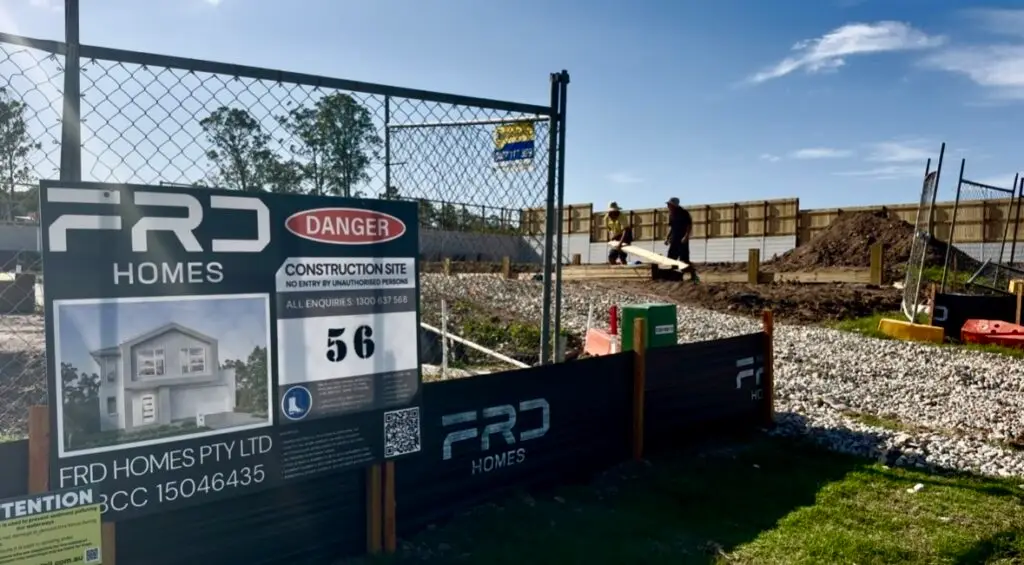
The Opportunity
What Happens When Housing Demand Exceeds Supply?
When housing demand consistently outpaces supply, market dynamics shift.
The typical sequence looks like this:
Rental vacancy rates fall
Competition among tenants increases
Rents rise
Property prices follow
This pattern is already visible across many Australian capital cities and key regional markets.
Why Are Vacancy Rates So Low?
Vacancy rates in many locations are sitting near historic lows. In some suburbs, they are below 1%.
A balanced rental market typically sits around 2–3% vacancy.
Sub-1% vacancy signals supply stress.
Low vacancy rates mean:
Fewer available rental properties
Shorter listing times
Higher tenant competition
Increased rental pricing power
When supply is constrained and population growth continues, pressure builds quickly.
Do Rising Rents Lead to Higher Property Prices?
Often, yes.
Here’s why:
Higher rents improve investor yields
Stronger yields attract investor demand
Increased investor demand supports price growth
While interest rates and credit conditions influence prices, sustained rental growth can strengthen long-term asset performance.
Why Is This Happening Now?
The current imbalance is driven by:
Population growth
Delays in new housing construction
Builder capacity constraints
Slower planning approvals
Rising construction costs
New supply has not kept pace with household formation.
That imbalance creates sustained rental pressure.
What Does This Mean for Property Investors?
When vacancy rates compress and rents rise, investors may benefit from:
Stronger cash flow
Improved yield positions
Reduced tenant turnover
Lower holding risk
However, success depends on:
Buying in undersupplied locations
Understanding local vacancy data
Monitoring pipeline supply
National headlines don’t replace suburb-level research.
Does a Housing Shortage Create Development Opportunities?
In undersupplied markets, adding dwellings can create leverage.
This may include:
Subdivision
Secondary dwellings
Duplex development
Small-scale infill housing
When demand exceeds supply, well-located new housing can experience:
Faster absorption
Strong rental demand
Competitive resale positioning
The key is ensuring feasibility works under current cost and lending conditions.
Bottom Line
When housing demand consistently exceeds supply:
Vacancy rates tighten
Rents typically rise first
Property prices may follow
Development opportunities increase
Australia is currently experiencing supply pressure across multiple markets.
For investors and owner-occupiers willing to add housing in constrained areas, opportunity often sits where imbalance persists longest.
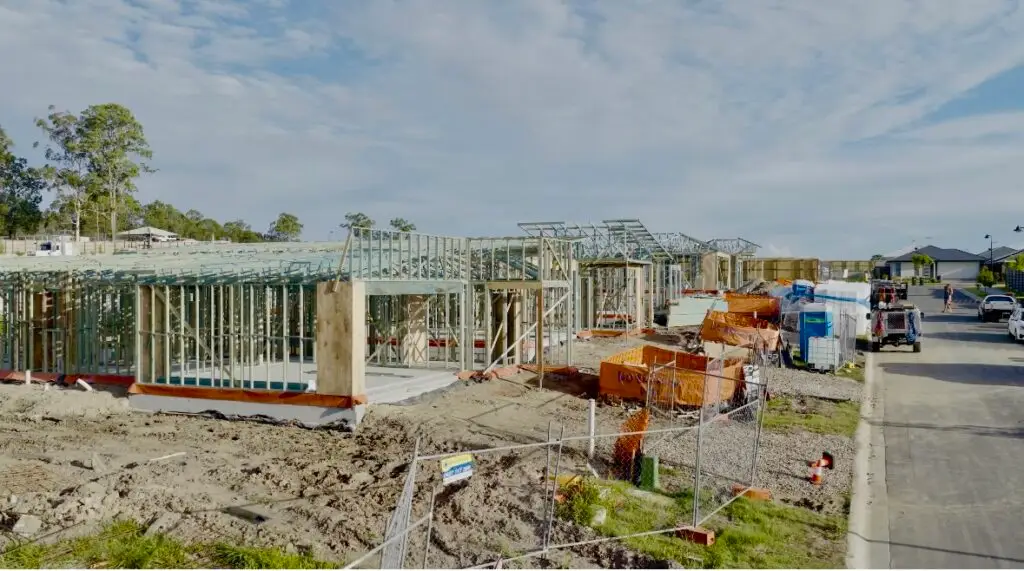
How to find + fill the gaps
1. Supply Shortfalls Put a Floor Under Values
Current projections suggest Australia could undershoot its new housing needs by 300,000–400,000 dwellings by the end of the decade.
New South Wales carries nearly half that gap. Queensland and Victoria aren’t far behind.
You don’t need a boom to win. You need demand that doesn’t go away and fewer homes competing with yours.
For owner-occupiers considering subdivision or adding a second dwelling, this means you’re not just improving your property – you’re adding something the market desperately needs – and scarcity does the heavy lifting.
2. Opportunity Is Local, Not National
There is no “Australian property market.” There are micro-markets, and they will move very differently.
Sydney’s land scarcity and planning constraints continue to funnel demand into established suburbs.
Melbourne’s affordability pressures push buyers toward medium-density and growth corridors.
Brisbane benefits from population inflows, lifestyle appeal, and relative affordability – supporting both houses and well-located units.
For investors and small-scale developers, this is good news. The best opportunities aren’t in massive projects – they’re in well-positioned sites where adding one or two dwellings materially increases supply.
National averages hide this. Local knowledge unlocks it.
3. Rental Pressure Favors Income-Producing Assets
Rental markets feel scarcity first and they’re already tight.
With limited new stock coming online, tenants compete for what exists. Vacancy rates stay low. Rents keep rising faster than wages in many areas.
For owner-builders creating additional dwellings, this isn’t theoretical demand – it’s immediate demand.
If it’s well-located and well-designed, it will be absorbed quickly.
4. The Right Product Matters More Than Ever
Scarcity doesn’t lift everything equally. Location, usability, and flexibility will outperform generic stock every time.
What is in demand is also changing:
More single-person households
More multi-generational living
More downsizers wanting low-maintenance homes
More buyers priced out of detached housing but still wanting quality locations
Detached houses on land-constrained sites remain resilient.
But medium-density – townhouses, duplexes, well-designed secondary dwellings – are becoming essential, not optional.
For investors and homeowners looking to subdivide, this is the sweet spot:
Align with how people actually live now, build what the future tenant or buyer needs and not what worked 20 years ago.
5. Positioning Beats Perfect Timing
A lot of people are still waiting.
Waiting for rates to drop.
Waiting for prices to soften.
Waiting for the “right” moment.
In a supply-constrained market, waiting is often the most expensive strategy. The winners over the next five years won’t be the people who timed the bottom perfectly.
They’ll be the people who were well-positioned:
Right location
Right planning potential
Right product
Right demand profile
Scarcity doesn’t reward hesitation. It rewards preparation.
If you already own property with subdivision or development potential, you’re sitting on leverage most people don’t even see yet.
If you’re looking to invest, this is a cycle that will reward adding supply, even at a small scale. It isn’t about speculation. It’s about solving a problem and being rewarded for it.